


BLOG
Why Your Mazda’s ABS Warning Light is On—and What You Should Do About It
The ABS (Anti-lock Braking System) warning light is one of the most critical indicators on your Mazda’s dashboard. When it illuminates and remains on while driving, it means your vehicle’s ABS system has detected a fault—and while your standard brakes will still work, you’ll lose the added safety of anti-lock braking. Here’s what this warning light could mean, what causes it, and how to properly address it.
What the ABS Warning Light Really Means
When you start your Mazda, the ABS light will typically illuminate for a few seconds as part of a self-check. If it then turns off, the system is functioning normally. However, if the light stays on or flashes intermittently while driving, there’s likely a problem in the ABS circuitry, sensors, or fluid pressure system.

Common Reasons Your ABS Light is On
Dirty or Malfunctioning Wheel Speed Sensors
Each wheel has a speed sensor that sends data to the ABS module. If these sensors are dirty, corroded, or misaligned due to debris or brake dust, they’ll deliver inaccurate data—or none at all. This can cause the ABS module to disable the system for safety, triggering the warning light.
Solution: Clean the wheel speed sensors and inspect for visible damage. If cleaning doesn’t help, sensor replacement may be required.
Low or Leaking Brake Fluid
Brake fluid pressure is essential for ABS operation. Low fluid levels, often caused by leaks, can prevent the ABS from engaging properly.
Solution: Check the fluid reservoir under the hood. Top up with the recommended brake fluid for your Mazda and check for signs of leaks around brake lines and calipers.
Faulty ABS Module
This central unit interprets sensor signals and controls ABS activation. Internal electronic faults, damaged circuits, or water ingress can render the module inoperative.
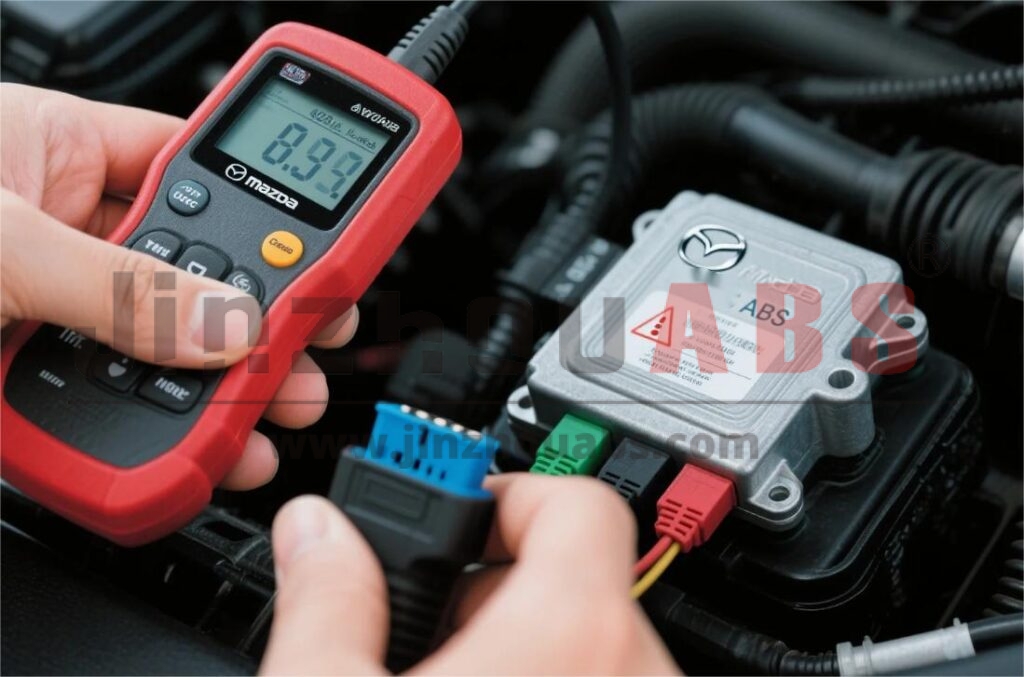
Solution: A diagnostic scan using an OBD-II reader can identify if the issue is module-related. Replacement may be necessary if the module is beyond repair.
Blown ABS Fuse
The ABS system is protected by a dedicated fuse. Electrical overloads or wear can blow the fuse, halting ABS functions entirely.
Solution: Locate the ABS fuse in your fuse box (typically labeled) and inspect it. Replace if blown using a fuse of the same amperage.
Wiring or Ground Connection Issues
Over time, wires may wear out, get pinched, or corrode—particularly in regions with high humidity or road salt exposure. A poor ground connection can also prevent proper communication with the ABS system.
Solution: Check wiring harnesses around the ABS sensors and control module. Look for cracked insulation, loose plugs, or rusted terminals. Tighten or replace as necessary.
Battery Voltage Irregularities
An aging or weak battery can cause voltage dips that disrupt ABS module operation, especially during startup or acceleration.
Solution: Have your battery tested. Replace it if it fails voltage or load tests. Also, inspect the alternator and charging system for consistent output.
Incompatible Tires or Uneven Wear
The ABS system relies on uniform wheel speed readings. Different-sized tires, unmatched wheel diameters, or severe tread wear differences can confuse the system.
Solution: Always use tires that match your manufacturer’s specifications. Replace mismatched or overly worn tires.
When the ABS Light Behaves Abnormally
Stays on after engine startup: Could indicate a deeper fault, possibly with ABS relays or module software.
Only comes on during high speeds: May suggest significant differences in wheel speed readings—often due to tire mismatch or wheel bearing issues.
Flashes during braking: Could point to intermittent sensor faults or a low-voltage condition under load.

What Should You Do?
Don’t Ignore It
Even if your brakes feel normal, the absence of ABS can be dangerous—especially on wet, icy, or uneven roads.
Perform a Visual Inspection
Check fluid levels, visible wires, and tire conditions yourself if you’re experienced. This could help you spot a quick fix.
Use a Diagnostic Tool
An OBD-II scanner can pull specific error codes, making it easier to identify which sensor or component has failed.
Visit a Professional
If the issue persists or seems electrical, consult a certified Mazda technician. They have specialized tools to diagnose complex ABS failures accurately.
Is It Safe to Drive?
Technically yes—but with a caution. Without ABS, your car will not modulate braking force during hard stops. This can cause wheel lock-up, reduced steering control, and longer stopping distances in emergency situations. It’s especially risky in rain, snow, or gravel.
Final Thoughts
An illuminated ABS warning light in your Mazda isn’t something to ignore. From dirty sensors to electrical faults, several issues could be at play. Taking timely action ensures your car retains its full braking performance and safety. Whether it’s a quick DIY sensor clean or a trip to a qualified mechanic, addressing the root cause early prevents costlier repairs and keeps you safe on the road.